
Passionflower
Traditionally used for nervous restlessness. Steep one teaspoon dried herb; avoid combining with alcohol or certain prescription medicines without professional advice.

Free educational articles for UK readers about evening meals, caffeine timing, and calming foods — written in plain language and based on published research. Results vary; this is not medical advice.
Explore Evening NutritionEducational notice: General UK lifestyle information only. Not medical or dietary advice. Individual experiences vary. Speak to a GP, dietitian, or pharmacist for personal guidance.
Botanical Calm
Apigenin is a flavonoid concentrated in chamomile flowers (Matricaria recutita). Laboratory studies have examined how it may interact with relaxation pathways in the brain. Some small human studies on chamomile extract report modest changes in self-reported sleep quality in certain groups, especially when tea is enjoyed consistently over weeks rather than once. Individual results vary and this is general education only.
Brewing method changes yield: cover your cup while steeping dried flowers for five to eight minutes in water just off the boil. Loose flowers generally release more apigenin than dusty bargain bags. Drink thirty to sixty minutes before bed as part of a screen curfew. Honey adds sweetness but also glucose — a thin drizzle is enough.
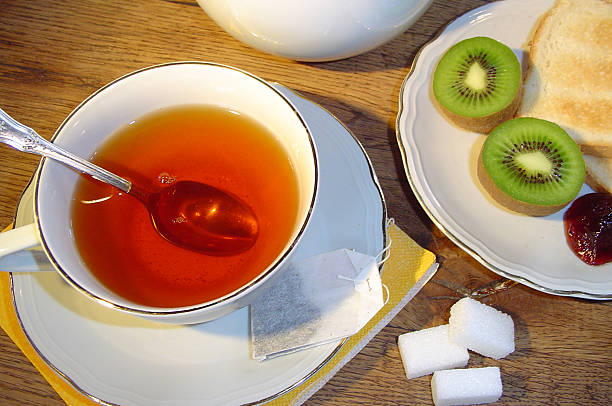
A small randomised study from Taiwan reported that adults eating two kiwifruits one hour before bed reported changes in self-rated sleep measures after four weeks. Mechanisms are not fully mapped, but kiwi delivers vitamin C, folate, potassium, and antioxidants. Serotonin precursors in the fruit are another proposed link discussed in research. Results vary and this is not a recommendation for any specific outcome.
Practical UK tip: green or gold kiwi both work; pair with a protein-fat anchor like Greek yoghurt to avoid an isolated sugar hit. If acid reflux bothers you, eat earlier or choose golden varieties. Kiwi allergy exists — patch test if you react to latex or birch pollen.
Kiwi complements rather than replaces dinner structure. Heavy meals plus late fruit can still disturb digestion. Think of it as a bridge snack after the cool-dinner plate described on our cold dinner page.
Traditionally used for nervous restlessness. Steep one teaspoon dried herb; avoid combining with alcohol or certain prescription medicines without professional advice.
Mild citrus-mint tea that pairs with reading. Grows well in UK gardens — fresh leaves need shorter steeping than dried.
Contains trace melatonin and anthocyanins. A 100–150 ml serving with dinner is common in sports recovery protocols adapted for sleep hygiene.
Botanicals fail when caffeine, late work stress, or oversized dinners remain unchanged. Layer habits rather than expecting tea alone to override physiology.
Herbs are biologically active. Chamomile may interact with warfarin and cyclosporine. Passionflower is not recommended in pregnancy without supervision. Tart cherry juice adds natural sugars — monitor if you track glucose closely.
UK herbal products should list allergens and comply with food safety law. Buy from reputable suppliers with batch testing. Report adverse reactions through the MHRA Yellow Card scheme if appropriate.
Check Your Caffeine TimingOne to two mugs of standard strength tea in the evening is typical in published studies. More is not necessarily better and may feel overly relaxing the next morning for sensitive people.
Weak chamomile is culturally common for children in some families, but paediatric guidance should come from a health visitor or GP. This site addresses adult lifestyle readers.
No. Consistent schedule, light management, meal timing, and stress buffers remain foundational. Plants support the routine; they do not substitute it.